

BATTERY INFORMATIONS FOR EU REGULATION
CR2025 Li-MnO₂ Button Battery (non-rechargeable)
General information
- Battery Name:Lithium manganese dioxide button battery (non-rechargeable)
- Category:Portable battery for general use
- Chemistry system:Lithium manganese dioxide
- Model:CR2025
- Nominal Voltage:3.0V
- Country of Origin:China
- Approx. Weight:2.3-2.6g (for reference only)
- Trade/Brand name:XINNEY / No-brand / OEM brands
- Production Date:According to customer requirements, generally printed on the negative terminal:YM
For example: 64=2026-04 6X=2026-10 6Y=2026-11 6Z=2026-12
Manufacturer
- Manufacturer Name:Shuyang Xinneng Battery Co., Ltd.
- Address:No. 1, Industrial Concentration Zone, Hanshan Town, Shuyang County, Suqian City, Jiangsu Province, China
- Postal Code:223600
- Website:www.xnbattery.com
- Email:xn_d@xinnengdianchi.com
European Authorized Representative
- Representative:Synertrade FR SAS
- Address:9 rue du Bat d'Argent,69001 Lyon,Franc
- Contact Person:Sophie Bennett
- Postal Code:69001
- Email:info@syner-sarl.cn
- Tel:+33 774555006
Battery characteristics data sheet
| Capacity | MAD | Application duration |
|---|---|---|
| 130mAh / 0.39Wh | 650 hours | 11.0 hours |
| 150mAh / 0.45Wh | 750 hours | 13.0 hours |
| 165mAh / 0.495Wh | 800 hours | 14.0 hours |
| 170mAh / 0.51Wh | 850 hours | 15.0 hours |
| 185mAh / 0.555Wh | 900 hours | 16.0 hours |
Hazardous Substances Statement
This product complies with the heavy metal concentration limits set out in Annex I of EU Regulation (EU) 2023/1542:
| Mercury (Hg): | ≤ 0.0005% by weight |
| Cadmium (Cd): | ≤ 0.002% by weight (portable batteries only) |
| Lead (Pb): | ≤ 0.01% by weight (portable batteries only; zinc-air button cells exempt until 18 August 2028) |
This product complies with the applicable restrictions of REACH Regulation (EC) 1907/2006, Annex XVII.
This product complies with the EU POPs Regulation (EU) 2019/1021.
SVHC Information Disclosure (REACH Article 33)
The electrolyte of this product contains ethylene glycol dimethyl ether (EGDME, CAS 110-71-4) above 0.1% w/w, a substance included in the REACH Candidate List of Substances of Very High Concern (SVHC). EGDME is an essential component of lithium battery electrolytes, and no viable alternative is currently available. This information enables downstream users to fulfil their information obligations under Article 33 of the REACH Regulation.
Usable extinguishing agent
Critical raw materials
Marking



Warning & Caution
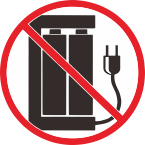
- Since the battery is not designed to be charged, there are risks of electrolyte leakage or causing damage to the device if the battery is charged.
- The battery shall be installed with its '+' and '-' polarity in correct position, otherwise may cause the battery to be charged or over-discharged.
- Short-circuiting, heating, disposing of in fire and disassembling the battery are prohibited.
- Battery cannot be forced discharge, which leads to excess internal gas generation and may result in bulging, leakage and explosion.
- New and used batteries cannot be mixed at the same time; when replacing batteries, it is recommended to replace all with the same brand type.
- Exhausted batteries should be removed from compartment to prevent over-discharge, which causes leakage and damage to the device.
- Direct soldering is not allowed, which will damage the battery.
- Keep the battery out of the reach of children to prevent swallowing; in case of accident should contact physician at once.
- The battery should not be dismantled and deformed.
- Do not store or carry batteries with metal objects (keys, coins, etc.) to avoid short-circuit.
- Do not immerse batteries in water or expose them to high humidity.
- Do not attempt to modify or solder the battery directly.
- If battery leakage occurs, avoid contact with skin and eyes. In case of contact, flush with plenty of water and seek medical advice immediately.
- If a battery leaks and materials contact eyes, flush immediately with running water for at least 15 minutes. Consult an ophthalmologist at once.
- If battery emits an odor, fever, discoloration, deformation or any abnormal phenomena appear in the process of use/storage, remove the battery immediately from the device and dispose of the battery.
- Do not mix batteries of different types, brands, or significantly different capacities.
- Avoid exposing batteries to extreme heat (e.g., direct sunlight, radiators).
Information on Prevention and Management of Waste Batteries for Primary Batteries
Prepared under Article 74.1 of Regulation (EU) 2023/1542; applicable to lithium manganese dioxide button cells.
Article 74.1(a) — Correct use and longer service life (waste prevention)
Instructions for use: Do not mix batteries of different brands, capacities, or states of use. Match the positive and negative terminals correctly during installation to avoid reverse connection and short circuits.
Storage: Store in a cool, dry place away from high temperatures and humidity. Remove the batteries if the device will not be used for a long time.
Use of remaining charge: Batteries depleted in one device may continue to be used in low-power devices such as clocks or remote controls. Do not recharge, dismantle, or modify single-use batteries.
Article 74.1(b) — Separate collection and legal obligations
Under Article 64 of the EU Batteries Regulation, you have a legal obligation to collect batteries separately:
Waste batteries must not be discarded with unsorted municipal waste. Do not litter or stockpile them.
Take waste batteries to dedicated collection channels so that they enter a compliant and safe treatment process.
Improper disposal of waste batteries may result in administrative penalties imposed by the environmental authorities of the relevant Member State.
Article 74.1(c) — Collection channels
You may dispose of waste batteries through the following compliant channels:
Retail outlets: Dedicated battery collection boxes are available in supermarkets, convenience stores, and hardware stores. Waste batteries can be returned free of charge when purchasing new batteries of the same type.
Public collection points: Community waste collection centres and municipal environmental collection points.
Brand channels: Authorised physical stores and official after-sales service points.
Article 74.1(d) — Safe disposal and risk warnings
Prohibited actions: Never dismantle, crush, or puncture batteries. Do not put batteries in a fire or expose them to high temperatures. Do not touch both terminals with a metal object, to prevent a short circuit.
Special warning for button cells: Button cells are small and pose a risk of accidental ingestion by children. Keep them out of the reach of children and make sure the battery compartment is locked after installation. If a button cell is swallowed, seek medical attention immediately.
Leakage: If a battery leaks, avoid direct contact of the electrolyte with skin or eyes. In case of accidental contact, rinse continuously with plenty of clean water and seek medical attention if discomfort occurs.
Temporary storage: Store waste batteries separately and away from flammable or explosive materials.
Article 74.1(e) — Labels and symbols
Under Article 13 of the EU Batteries Regulation, the markings and symbols printed on batteries and their packaging mean:
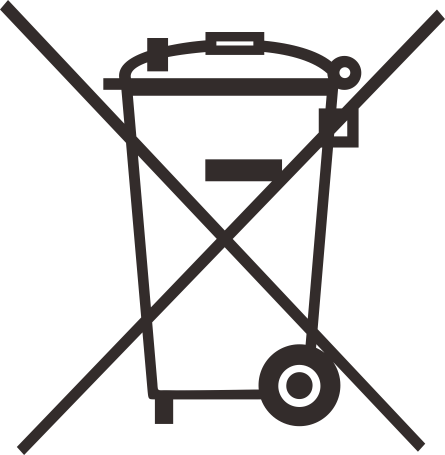
Crossed-out wheeled bin: Do not dispose of batteries as household waste; they must be collected separately for treatment.
Chemical symbols: These identify the main substances in a battery. Hg or Cd indicates that a battery contains regulated hazardous substances such as mercury or cadmium.
+ / - symbols: These identify the positive and negative terminals. Match them with the device terminals during installation.
Article 74.1(f) — Environmental and health impacts
Hazards of improper disposal: Batteries contain corrosive electrolyte and metals such as zinc and manganese. If they are landfilled or incinerated with household waste, they can contaminate soil and groundwater, irritate human mucous membranes, and damage ecosystems.
Value of compliant recycling: Standardised recycling enables metals to be recovered and reused, reduces environmental damage from primary mineral extraction, and supports EU circular economy requirements.
Note: If you have any questions, contact the brand’s official customer service or consult the official recycling guidance published by the environmental authorities of your Member State.
Conformity with legislation
The above information is in conformity with the following legislations: REGULATION (EU) 2023/1542 OF THE EUROPEAN PARLIAMENT AND OF THE COUNCIL of 12 July 2023 on the harmonisation of the laws of the Member States relating to sustainability, safety, labeling/information of Batteries — battery was assessed and found to be in conformity with the enforceable requirements of Articles 6, 13 of the Regulation.
Supplier responsibility note: We understand that the OEM of the device which contains the battery, or battery supplied by the OEM as a replacement part in the European Economic Area (EEA), has the responsibility of preparing the DOC & TDC. As a battery supplier stipulated in Article 39, we will provide the information included in this document as backup to our customers who are manufacturers.
Disclaimer: The information provided above is supplied by Shuyang Xinneng Battery Co., Ltd. based on current product characteristics and EU regulatory requirements. This information is subject to change in response to amendments of legal requirements or changes in product characteristics. Shuyang Xinneng Battery Co., Ltd. reserves the right to modify the content at any time without prior notice.
